Join the waitlist
Articles & Energy Guides
Clear explanations to help you understand
energy prices, tariffs and whether staying
or switching could offer better value

How to Read an EDF Energy Bill: A Step-by-Step Guide
Learn how to read an EDF energy bill using a real example. Find your annual kWh usage, unit rates, standing charges, meter readings and account balance.

Is my energy usage high? How to compare your gas and electricity use
Not sure whether your gas or electricity usage is high? See the latest Ofgem typical usage figures and learn why your own kWh matters when comparing energy tariffs.

What happens to your energy tariff when you move house?
Moving home can affect your fixed tariff, exit fees and which energy deal is cheapest. Learn what happens to your energy supply when you move and how to compare your options.

Fixed vs variable energy tariff: which is actually better?
A fixed energy tariff gives you price certainty, while a variable tariff can rise or fall. Learn how to compare the two and decide which may be better for your household.

How to compare two energy tariffs properly
Two energy tariffs can look easy to compare, but headline prices and monthly payments can be misleading. Learn how to compare unit rates, standing charges and other costs using the same household energy consumption.

When can you leave a fixed energy tariff without paying an exit fee?
You don't always have to wait until your fixed energy tariff ends to switch without an exit fee. Learn how the 49-day switching window works and what to check before moving tariff.

Are low or zero standing charge energy tariffs really cheaper?
A lower or zero standing charge can look like an obvious saving, but the unit rate may be higher. Learn how to calculate whether a low-standing-charge energy tariff is actually cheaper for your household.

Economy 7 vs single-rate electricity: which is actually cheaper?
Economy 7 gives you cheaper electricity overnight but a higher day rate. Learn how to calculate whether Economy 7 or a single-rate tariff is actually cheaper for your household.

How much electricity must you use off-peak for a time-of-use tariff to be cheaper?
A cheap off-peak electricity rate doesn't automatically mean a cheaper tariff. Learn how to calculate the percentage of your electricity that must be used off-peak before a time-of-use tariff saves money.

Is an EV energy tariff actually cheaper for your household?
A cheap EV charging rate does not automatically mean a cheaper household energy tariff. Learn how peak rates, off-peak charging, standing charges and your actual usage determine whether an EV tariff really saves money.

Why your energy quote can be different from your monthly Direct Debit
A lower monthly energy quote doesn't necessarily mean a cheaper tariff. Learn why your Direct Debit, account balance and estimated energy costs can show different amounts.

Where to find your annual energy usage on your electricity and gas bill
Not sure where to find your energy usage? Learn how to identify your annual electricity and gas consumption in kWh on your energy bill — and which figures not to confuse it with.

Should you compare energy tariffs using your Direct Debit or your actual kWh usage?
Your monthly Direct Debit isn't necessarily the cost of the energy you use. Learn why your actual kWh consumption gives you a better basis for comparing energy tariffs.

Is it worth paying an energy tariff exit fee to switch?
Paying an exit fee doesn't necessarily mean switching energy tariff is a bad idea. Learn how to compare the fee with the saving you could actually make.

The October energy price cap is £1,723. But that doesn't mean your annual bill will be £1,723
Why annualised price-cap figures, headline savings and your actual energy costs are three different things.

Should I fix my energy tariff before October 2026?
The October price cap is rising and fixed tariffs are available below it. Here's what to consider before deciding whether fixing your energy tariff is right for you.
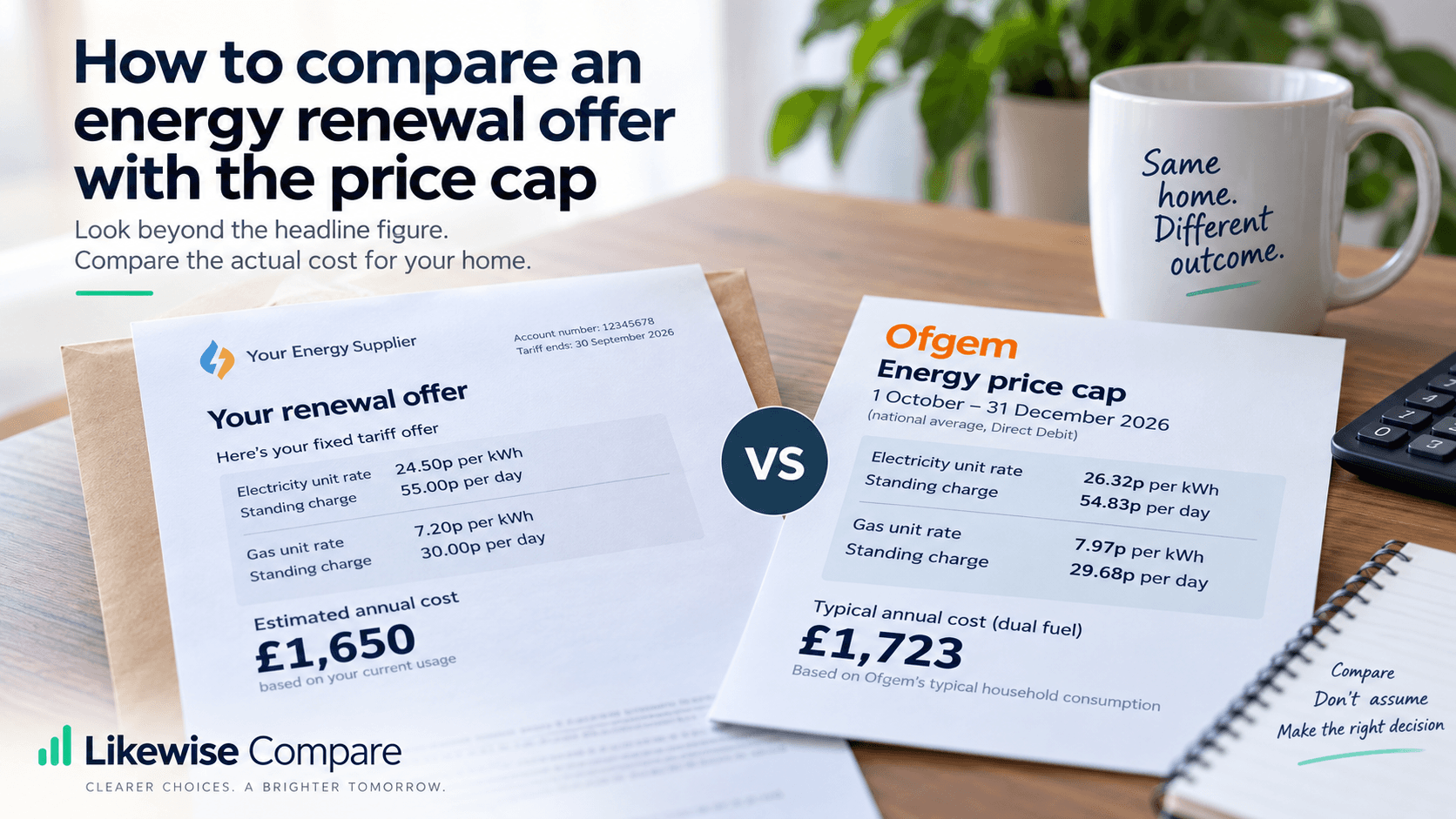
How to compare an energy renewal offer with the price cap
Received an energy renewal offer? Learn how to compare it with the Ofgem price cap using your own energy consumption, unit rates and standing charges.

Is it cheaper to stay with your current energy supplier or switch?
Switching energy supplier isn't always cheaper. Learn how to compare your current supplier's offer with the wider market using your actual energy consumption, tariff rates and exit fees.

Why a £200 energy saving might not actually save you £200
A tariff may promise a £200 annual saving, but that doesn't necessarily mean your household will be £200 better off. Here's what an energy saving figure really tells you — and what to check before switching.
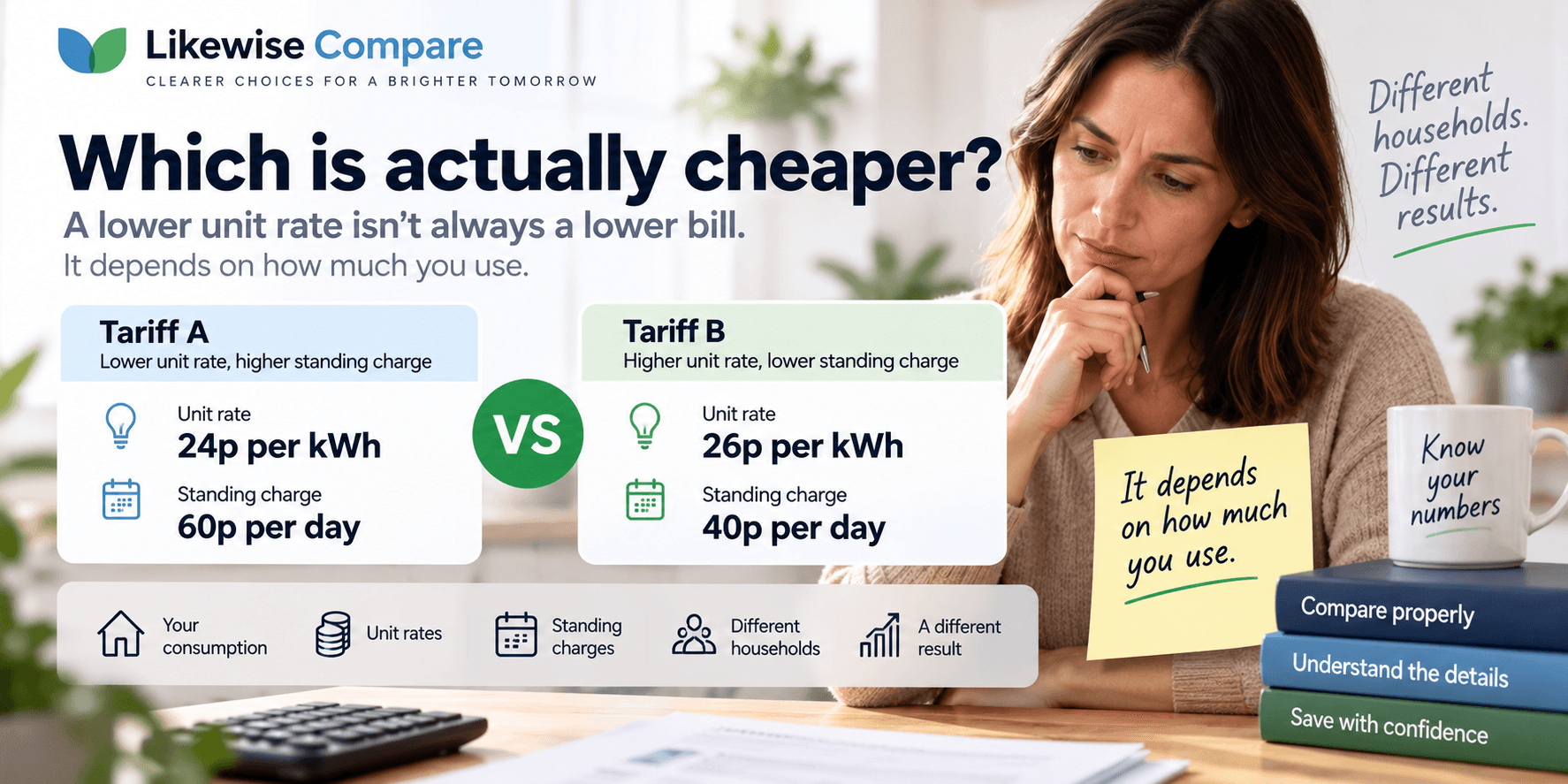
Energy unit rates vs standing charges: what actually matters for your bill?
A cheaper energy tariff isn't always the one with the lowest unit rate. Learn how unit rates, standing charges and your energy consumption combine to determine what you actually pay.